



News
The Creative Habits Behind Meaningful Work

Creative work is often described as though it arrives in moments of inspiration. A breakthrough idea appears unexpectedly, a solution presents itself, or a blank page suddenly fills with possibilities. While those moments do happen, they are rarely what creative people rely on day after day. Meaningful work is more often the result of habits than inspiration. It grows through repetition, focus and the willingness to return to an idea long enough for it to develop.
Whether you’re designing a product, writing an article, sketching concepts or making by hand, the challenge is often the same. How do you create the conditions that allow good work to happen consistently? Most creatives answer that question through their own creative process, or a series of rituals. A morning walk perhaps before opening a laptop. A cup of coffee prepared the same way every day. Or a notebook opened to a fresh page. These small actions create a sense of readiness, helping us shift from everyday distractions into a more focused state of mind.
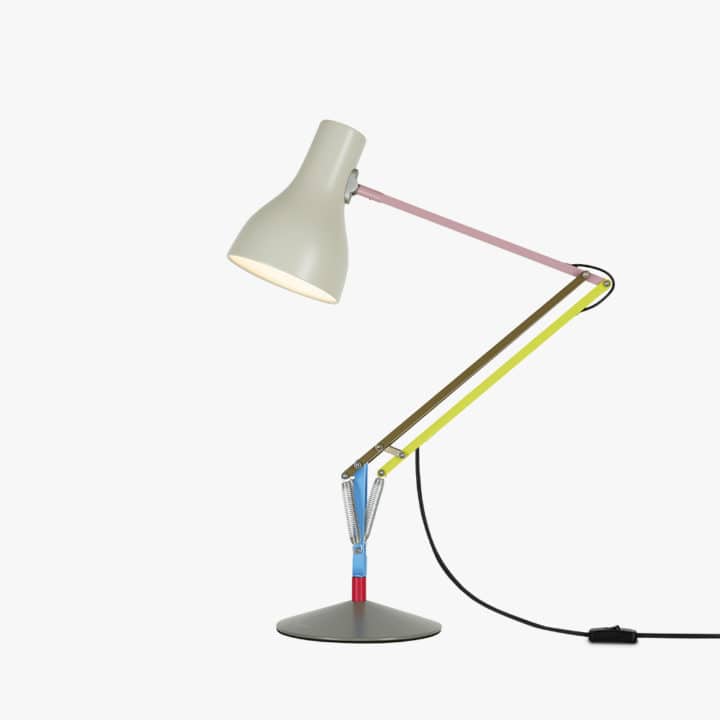
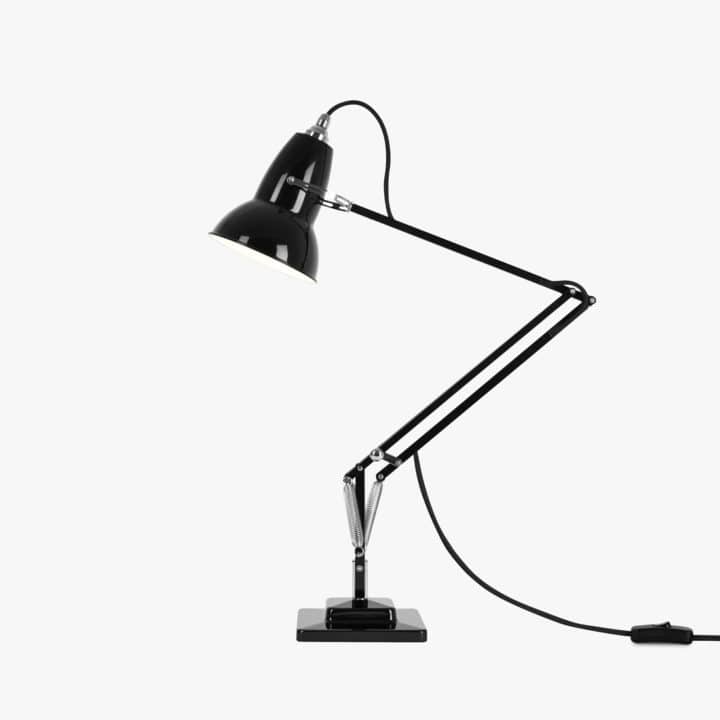
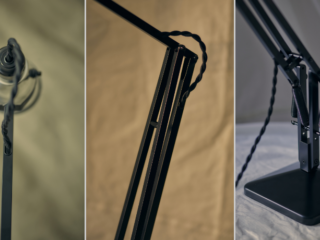
Among those rituals, while sitting or standing it your workspace one object often plays a surprisingly important role. The desk lamp may seem like a practical tool, but for many people it marks the beginning of a creative session. The moment it switches on, attention narrows, distractions recede and the work comes into focus.
In the words of Deyan Sudjic, the ex-director of the Design Museum London, from his book “The Language of Things:
“To switch on an Anglepoise and to move it into position is to suggest that you have started work. It is like opening the shutters of a shop, or raising a curtain in a theatre.”
Deyan Sudjic – Author
Why Rituals Matter More Than Inspiration
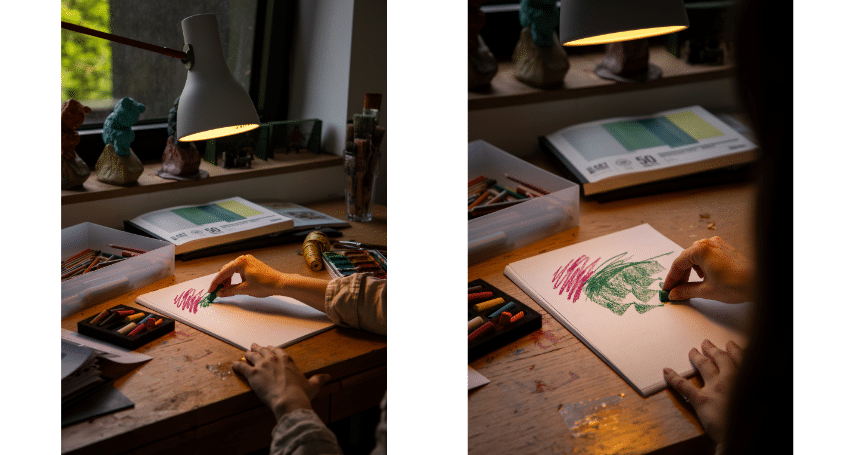
There is a persistent myth that creativity depends on waiting for the right idea. In reality, most successful creatives spend far less time waiting and far more time establishing routines that make creative work easier to begin. Research into habit formation suggests that our brains respond strongly to repeated cues. When certain actions consistently precede a particular behaviour, those actions become signals that help us enter the right mindset more quickly.
This is especially valuable when the work requires concentration. Creative projects are often open-ended, uncertain and mentally demanding. Unlike routine tasks, there is rarely a clear path from beginning to end. Starting can feel difficult, which is why rituals matter. They reduce friction. Instead of relying on motivation, they create familiarity. Over time, the ritual itself becomes associated with the work.
Many creative professionals develop these habits without consciously planning them. A designer may review sketches over a morning coffee before opening a computer, while a writer might spend ten minutes reading before beginning a draft. Or an artist may organise materials in the same way before starting a new piece. The ritual isn’t what produces the work, but it helps create the conditions in which work can happen.
The Desk Lamp as a Tool for Focus
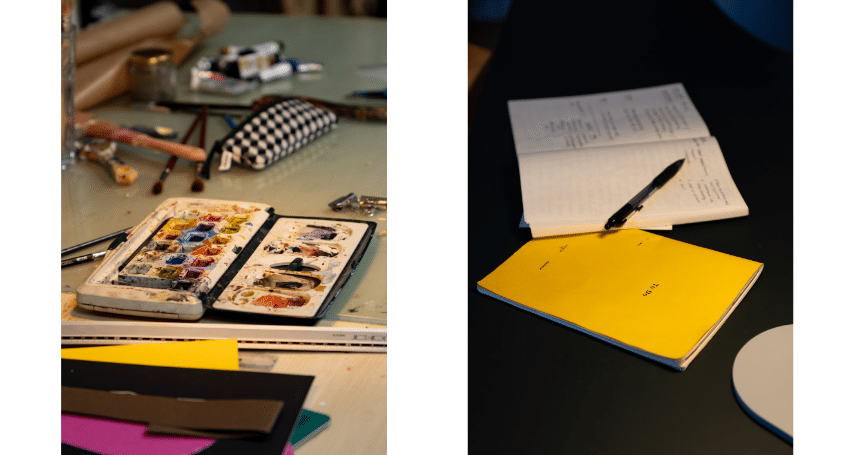
The most effective creative tools are often the simplest. A notebook captures ideas before they disappear. A pencil allows thoughts to move from mind to paper. A desk lamp creates an environment where focus feels easier to sustain.
For many people, switching on a desk lamp becomes a small but meaningful act. It creates a boundary between different parts of the day. In homes where work and personal life increasingly share the same spaces, those boundaries matter more than ever. A dining table may function as an office during the day and a family space in the evening. A spare room may serve as both studio and guest room. The physical separation that once existed between home and workplace has become less distinct and in many cases blended.
A desk lamp helps restore a sense of purpose to a particular space. When illuminated, the desk becomes the centre of attention. The pool of light naturally draws the eye towards the task at hand, encouraging a deeper level of concentration. It’s a subtle effect, but an important one. Rather than lighting an entire room, a focused light creates a defined area for thinking, making and problem-solving.
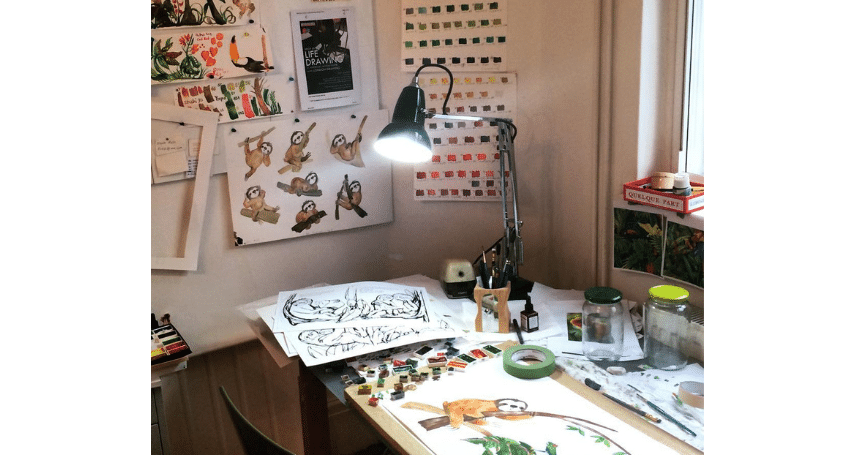
This is perhaps why desk lamps appear so consistently in creative workspaces. Not because they are decorative, but because they support the work itself. They become part of a routine, quietly signalling that it’s time to begin.
Creative Work Needs Boundaries
One of the greatest challenges facing creative professionals today is not a lack of ideas but a lack of uninterrupted attention. Messages arrive constantly. Notifications compete for focus. Work is expected to happen alongside countless other demands. In this environment, creative rituals become increasingly valuable because they create boundaries where none naturally exist.
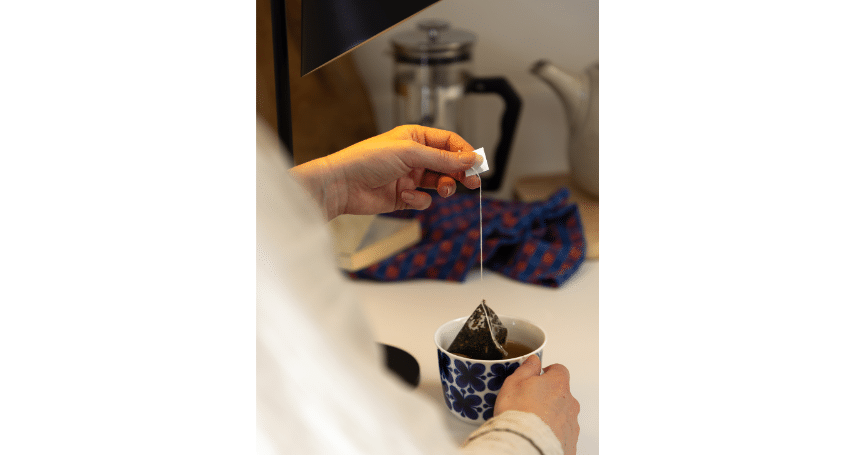
Those boundaries do not have to be complicated. They can be as simple as putting a phone away, making a drink before sitting down to work or taking a short walk before beginning a project. The important thing is consistency. Repeating the same actions creates a transition between one mode of thinking and another.
Whatever your ritual, these actions help us return to the work that matters. A desk lamp may be a simple object, but in creative workspaces it often signals something more important: the beginning of a period of focus and concentration.