



News
Mid-Century Modern Lighting: A Room Guide
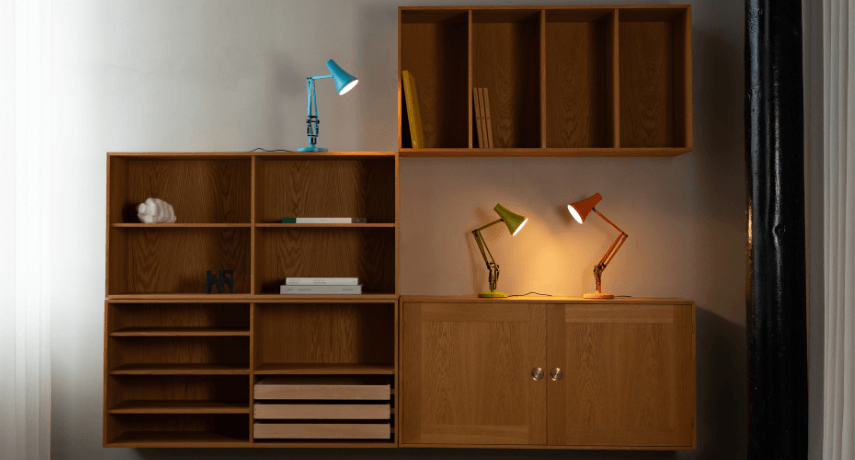
Mid-century modern design has never really disappeared. More than half a century after its heyday, the clean lines, practical forms and thoughtful use of materials associated with the movement continue to influence the way we furnish our homes.
For design-conscious homeowners, mid-century modern lighting is one of the easiest ways to introduce some of that character without redesigning an entire room. A well-chosen desk lamp, pendant, floor lamp or wall light can add definition to a space while providing useful light exactly where it is needed. This balance between appearance and purpose is important, because many of the best mid-century designs were created first and foremost to be useful.
What is mid-century modern design?
Mid-century modern broadly describes the architecture, furniture and product design that emerged around the middle of the 20th century, particularly from the 1940s through to the 1960s. Its roots stretch further back, however, to early modernist movements such as the Bauhaus, where designers were already challenging unnecessary ornament and exploring simpler forms, new materials and the possibilities of industrial production.
After the Second World War, those ideas developed in different ways across Europe and America. Designers including Charles and Ray Eames, Hans Wegner, Robin and Lucienne Day and Gio Ponti explored new approaches to furniture and everyday objects, while developments in manufacturing made good design increasingly accessible. In Britain, the Festival of Britain in 1951 also helped introduce a more optimistic and contemporary approach to architecture, furniture and interiors to a wider audience.
Although there was no single mid-century look, the period became associated with clean lines, practical forms, honest materials and objects designed around the way people actually lived. These principles are one reason the style has remained so relevant.
Today, modernist home decor does not need to mean faithfully recreating a 1950s or 60s interior. It is often much more successful when different periods are allowed to sit together. A few strong pieces of furniture or lighting can bring modernist character to a room while contemporary furniture, artwork, books and personal objects prevent the space from feeling like a period set.
What makes lighting feel mid-century modern?
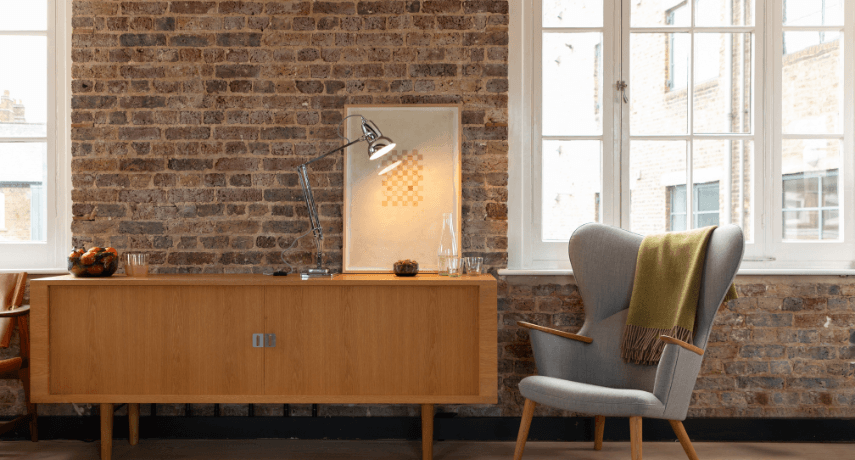
There isn’t one formula for mid-century lighting. Some designs are architectural and restrained, while others embrace bold colour, curves and unusual proportions. Simple geometric shades, articulated arms, visible engineering and carefully considered proportions are all common features, alongside materials such as painted metal, aluminium, brass, glass and timber.
Function is just as important as appearance. Lighting during the modernist period was often treated as a practical piece of equipment, whether it was designed to illuminate a desk, create a comfortable place to read or bring softer light to a living space. When choosing vintage-inspired lighting today, thinking about what the light needs to do is therefore a good place to begin.
Anglepoise’s Original 1227 actually predates the conventional mid-century period, having been introduced in 1935 following George Carwardine’s development of a constant spring mechanism. Its functional approach, visible engineering and enduring form nevertheless sit naturally alongside many of the principles that came to define modernist design.
Mid-century modern lighting for the living room
A good living room lighting scheme rarely relies on one central source of light. Combining overhead illumination with smaller pools of light around seating, shelving and side tables creates depth and allows the atmosphere of the room to change throughout the day.
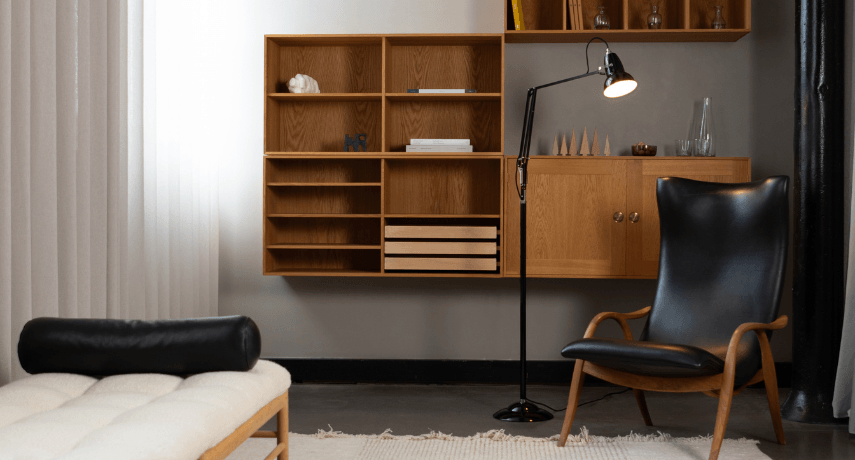
For a mid-century influence, it helps to resist filling every available corner with another statement piece. Instead, consider where light is genuinely useful. A floor lamp beside a sofa or armchair can provide focused illumination for reading while contributing height and structure to the room. Wall lights can perform a similar role without occupying floor space, particularly in smaller living rooms.
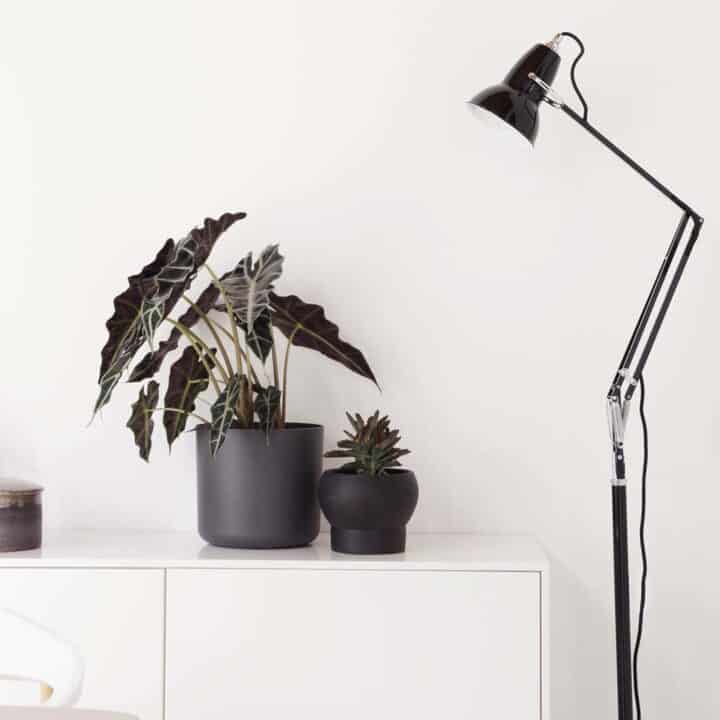
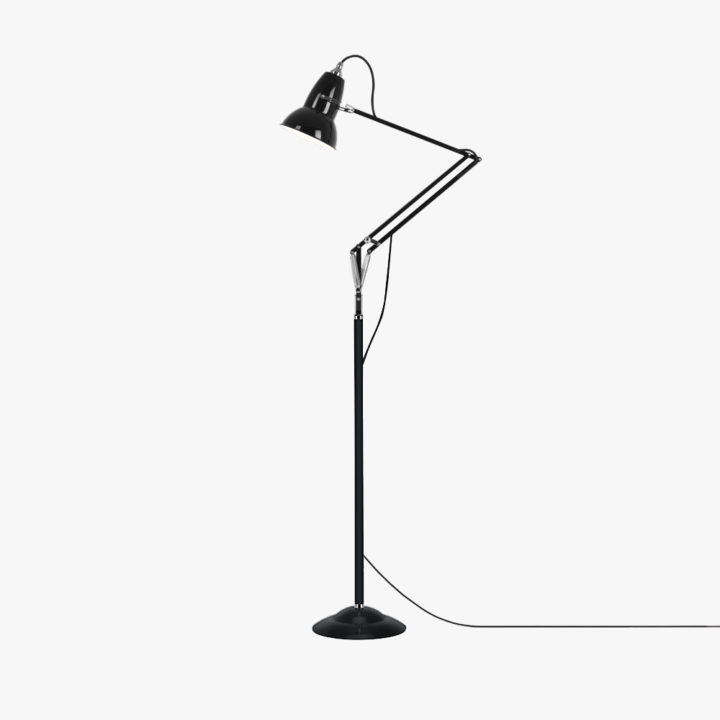
The Original 1227 collection works naturally in this kind of setting because its recognisable shade, articulated arms and visible spring mechanism give it presence without relying on decoration. A floor or wall-mounted version can sit comfortably alongside timber furniture, contemporary upholstery and stronger mid-century pieces without making the whole room feel themed.
Colour can also make a significant difference. Black and neutral finishes tend to provide definition against lighter walls, while a stronger colour can work as a smaller accent within an otherwise restrained scheme. Rather than trying to match every metal finish and colour exactly, look for enough repetition across the room to make the choices feel intentional.
Choosing lighting for a mid-century bedroom
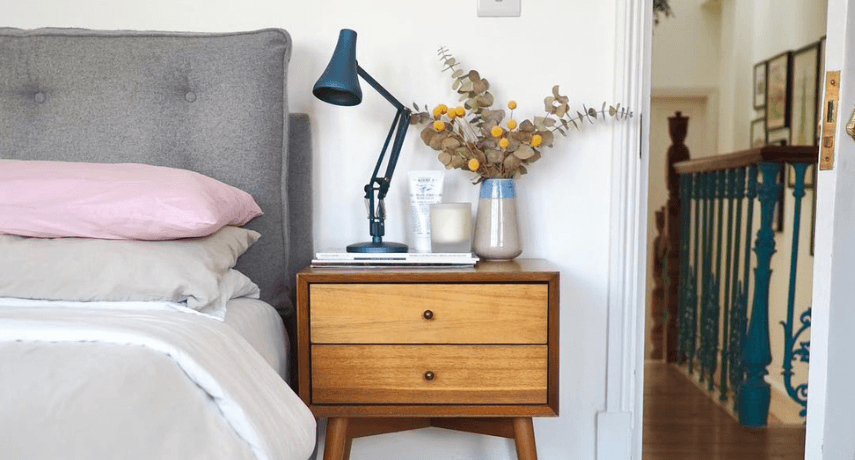
Bedroom lighting needs to balance atmosphere with practical use. A ceiling pendant can provide general illumination and establish some of the character of the room, while bedside lights offer a softer, more focused source of light for reading and winding down.
If bedside tables are small, wall-mounted lighting is particularly useful. Sconce and pendant lights can work well together without needing to come from the same collection; a shared material, colour or shade shape is often enough to create a visual connection.
For a subtle mid-century feel, try combining warm neutrals with darker accents, natural timber and occasional areas of stronger colour. A black wall light can bring definition to a pale bedroom, while a coloured shade can provide a small focal point without dominating the room.
This is also where restraint becomes particularly important. If the room already includes a walnut bed, patterned textiles and vintage furniture, the lighting doesn’t necessarily need to reinforce every one of those references. Mixing a simpler contemporary light into the scheme can make the older pieces feel more considered.
Creating a mid-century reading corner
Reading corners are a particularly good place to put modernist lighting principles into practice because the requirements are relatively simple. You need somewhere comfortable to sit, a surface for a book or drink and enough focused light to read comfortably.
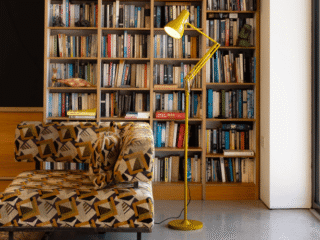
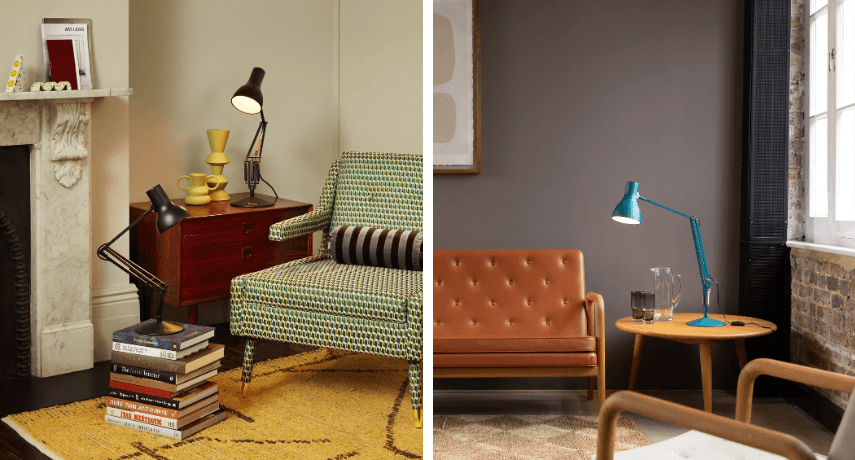
Instead of relying on the room’s general lighting, position a directional floor lamp beside or slightly behind the chair so the light falls onto the page without shining directly into your eyes. An adjustable lamp is especially useful because it can be repositioned depending on how you are sitting or what you are doing.
The Type 75 Lamp, designed by Sir Kenneth Grange, is well suited to this kind of space. Its adjustable construction provides practical task lighting, while its relatively restrained silhouette works alongside both original mid-century furniture and contemporary pieces.
There is no need to pair it with an explicitly mid-century chair either. Combining a Type 75 with a contemporary armchair, an older wooden side table and a favourite piece of artwork can create a much more personal interpretation of the style. The connection comes from proportion, material and function rather than every object belonging to the same decade.
Mid-century lighting for the dining room
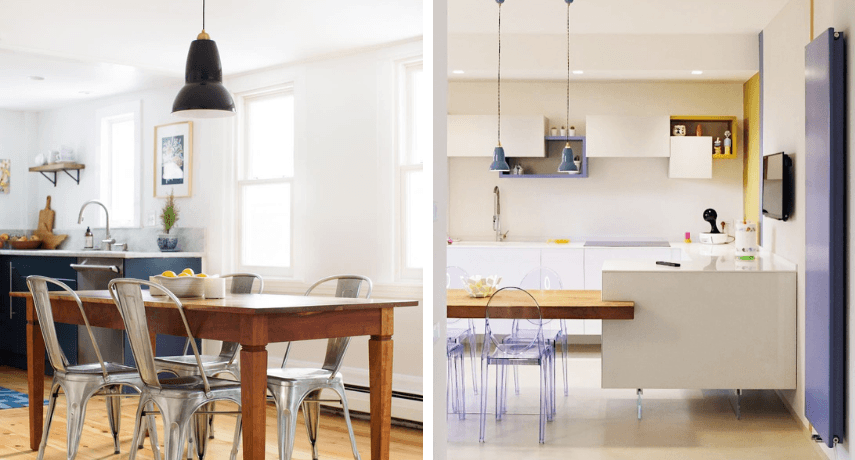
The dining table provides a natural focal point for lighting, particularly in open-plan homes where the kitchen, dining area and living space share one room. A pendant helps visually define the dining area and brings the source of light closer to the table, creating a more intimate atmosphere in the evening.
Scale and positioning are important. A small pendant can easily disappear above a long table, while an oversized design can dominate a compact dining room. Look at the proportions of the table and surrounding furniture together, and hang the light low enough to feel connected to the dining area without interrupting sightlines across the table.
If you already have distinctive dining chairs or a strong timber table, the lighting can afford to be quieter. A simple metal shade or restrained pendant can provide enough contrast while retaining the functional quality associated with mid-century interiors. This approach also makes it easier to change furniture and accessories over time without having to rethink the entire lighting scheme.
Lighting a mid-century home office
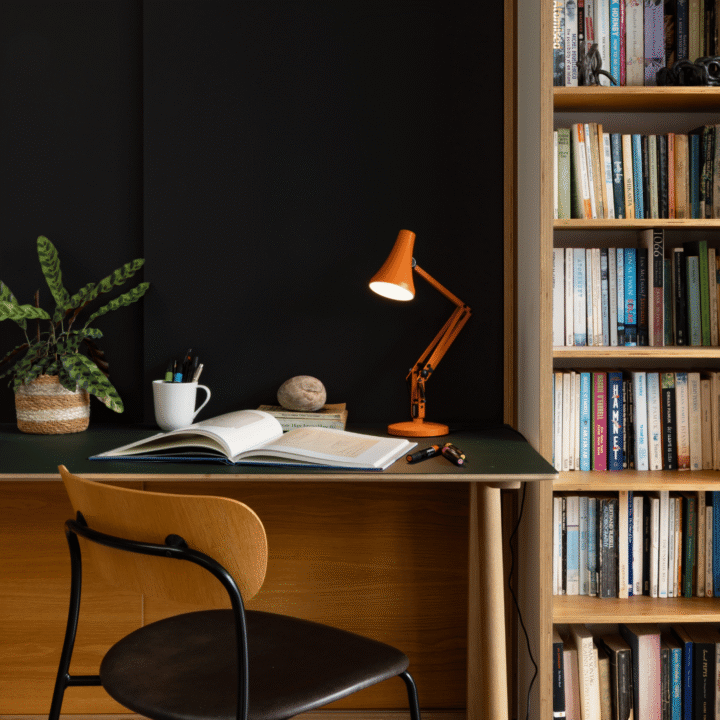
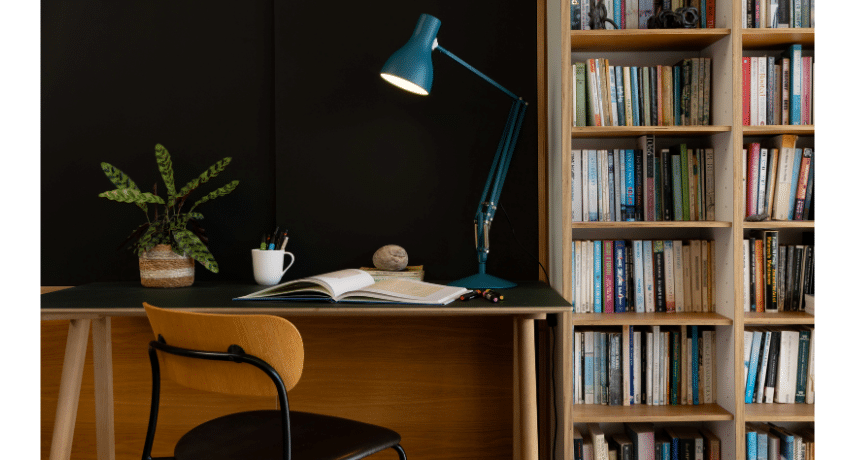
Few rooms demonstrate the relationship between form and function better than the home office. Good desk lighting should respond to the work being done, whether that means bringing the light closer for drawing and writing or directing it away from a screen to reduce unwanted glare.
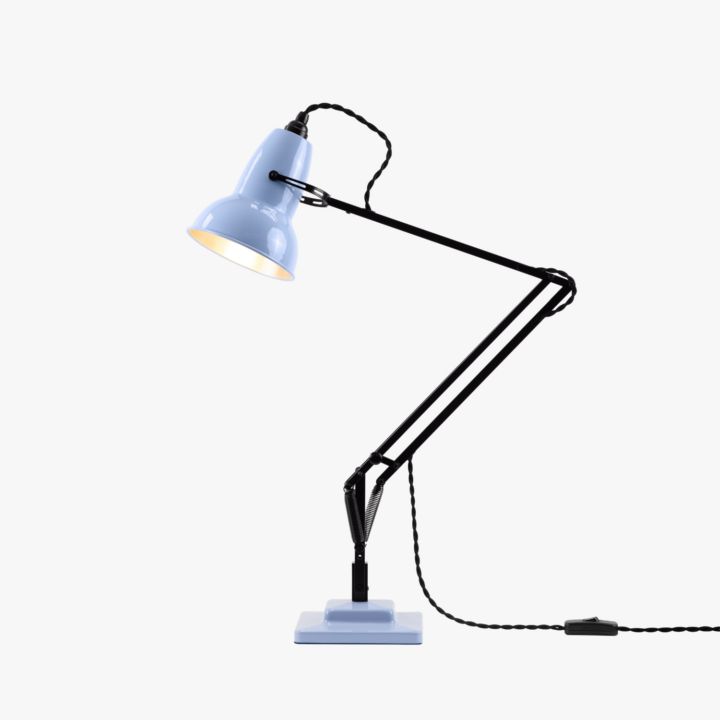
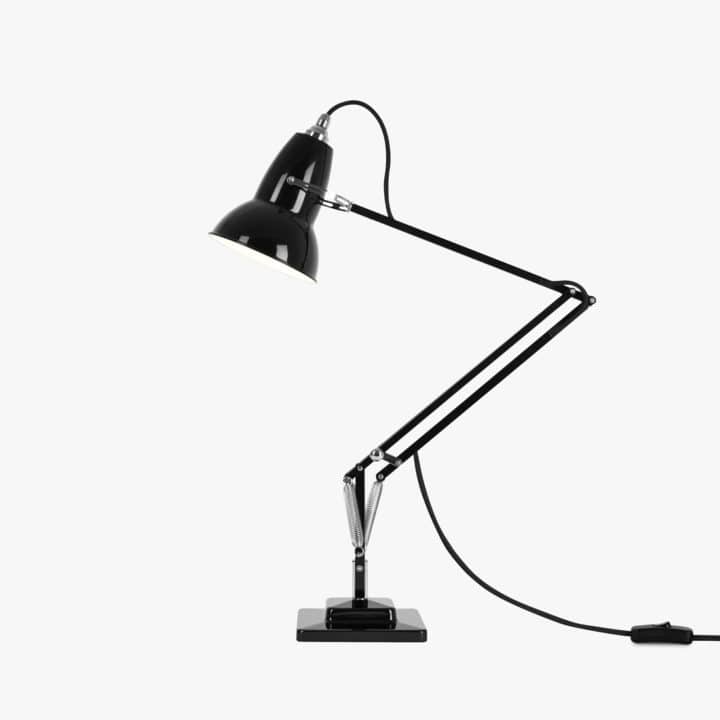
The Original 1227 Desk Lamp works particularly well here. Developed by George Carwardine and Herbert Terry & Sons in 1935, its spring mechanism allows the lamp to be moved into different positions while maintaining its balance. The visible springs and articulated arms also give the design the purposeful, engineered quality that works so well within modernist interiors.
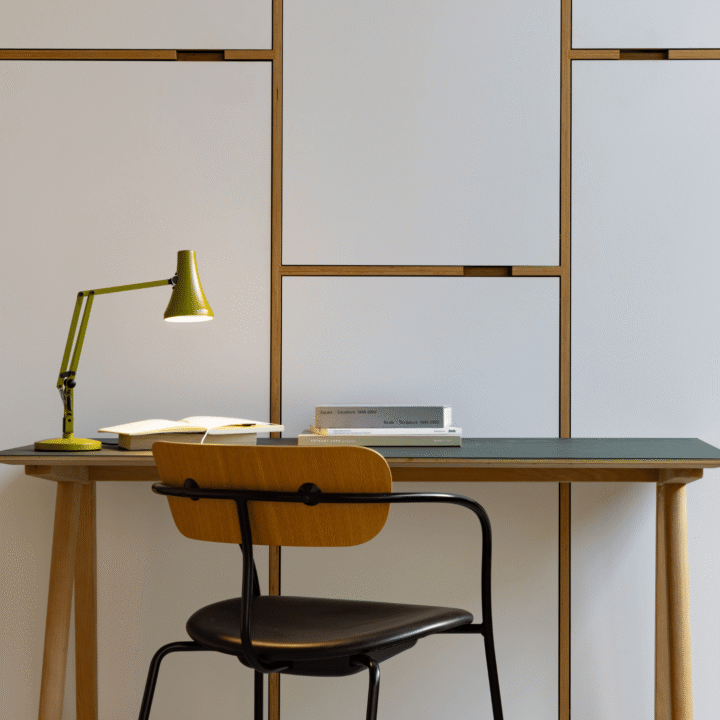
For a more streamlined alternative, the Type 75 Desk Lamp offers a contemporary interpretation of the Anglepoise approach. Designed by Sir Kenneth Grange, its clean profile and adjustable construction make it easy to introduce into a modern workspace without the room becoming overtly retro.
Either can be paired with furniture from different periods. A vintage wooden desk, contemporary office chair and Anglepoise task lamp can often feel more natural than trying to source an entire matching mid-century office.
Mid-century modern lighting in the kitchen
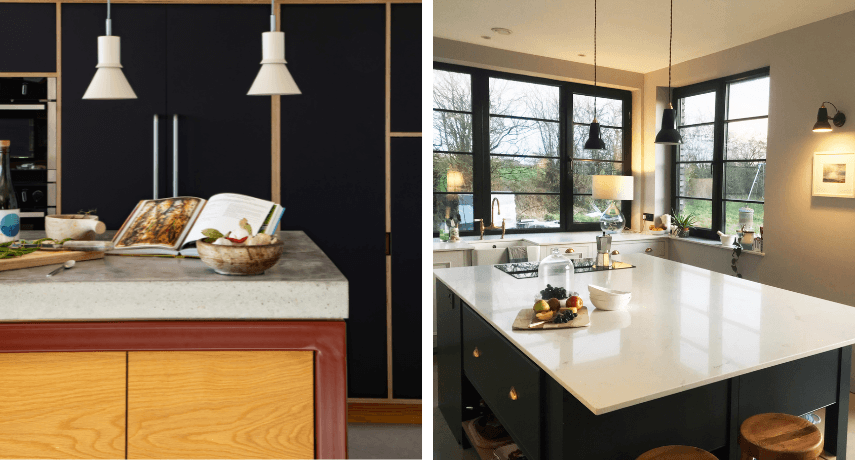
A mid-century-influenced kitchen doesn’t require globe pendants, walnut cabinetry and patterned tiles all at once. Lighting can provide a much quieter reference to the period, particularly when the architecture and cabinetry are more contemporary.
Pendants are useful for defining an island or dining area, while wall lights can illuminate shelving, preparation spaces and corners that aren’t well served by the main ceiling lights. Layering these sources also allows a kitchen to move from practical, brighter illumination while cooking to a softer atmosphere later in the evening.
When choosing finishes, consider how the lighting relates to the cabinetry, worktops and hardware already in the room. Black or neutral painted metal can create contrast against timber and lighter cabinetry, while a stronger colour can introduce personality without requiring permanent changes to the kitchen itself.
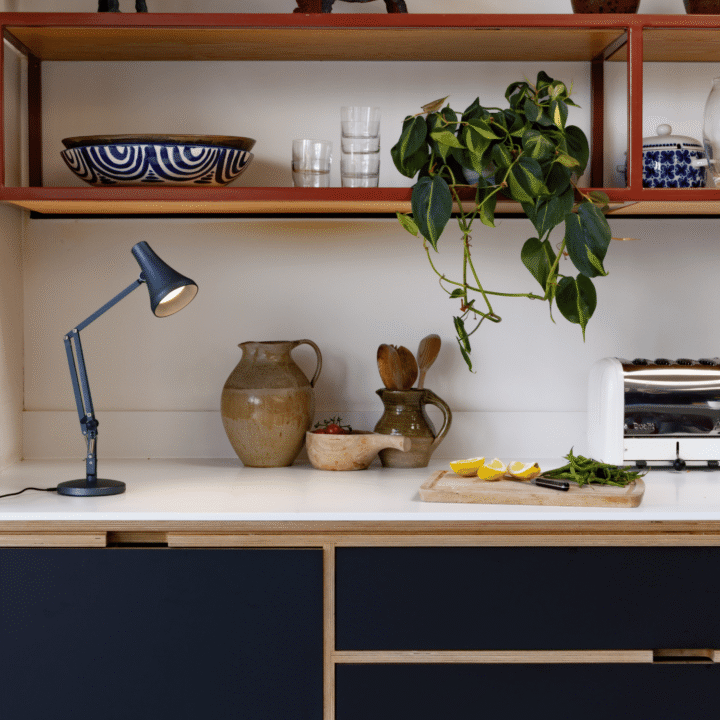
An Original 1227 Desk Lamp can also work well on a shelf, sideboard or small workspace within a larger kitchen. Its familiar form brings an industrial and modernist element to the room while still functioning as a useful source of directional light.
How to mix mid-century lighting with contemporary interiors
One of the easiest mistakes to make with retro lighting fixtures is trying to make every element of the room match. Mid-century modern interiors in 2026 tend to feel more convincing when they borrow the principles of the period rather than attempting to recreate it exactly.
Contrast is useful. An older wooden sideboard can sit beneath contemporary artwork, while a modern sofa can be paired with a vintage armchair and an adjustable metal floor lamp. Instead of focusing too heavily on dates, look for good proportions, useful forms and materials that complement one another.
Colour should be approached in much the same way. Mid-century interiors are often associated with mustard yellow, olive green, burnt orange and warm timber, but using all of these together can quickly become predictable. A single stronger colour against quieter surroundings can give a clearer reference to the period while leaving the room feeling contemporary.
The same applies to lighting. The Original 1227 is an example of a design that came before the conventional mid-century period but shares its emphasis on function and engineering, while the Type 75 demonstrates how those principles can continue to evolve through later design. Neither requires an entirely period-correct interior to make sense.
Choosing mid-century modern lighting that will last
The continuing popularity of mid-century modern design has inevitably created plenty of trends around it, but the original appeal of the movement was much more practical. Many of its most recognisable objects have remained relevant because they were useful, well proportioned and designed around everyday life.
That is a useful approach to take when planning your own interior lighting design. Begin by thinking about where light is needed and how each part of the room is used, then consider the fixture that best meets that requirement. A pendant might anchor a dining table, while a wall light can free up space beside the bed. An adjustable floor lamp can make a reading chair more useful, and a task lamp can provide focused illumination across a desk.
From there, materials, colour and form can help establish the mid-century influence. Choosing fewer, better-considered pieces also gives your home room to evolve. Furniture can move, walls can be repainted and new objects can be introduced without the lighting suddenly feeling out of place.
Ultimately, the most enduring lesson of mid-century modern lighting isn’t about recreating a particular decade. It’s about choosing objects where form and function have been considered together. Get that balance right and the result can feel just as relevant in 2026 as the designs that inspired it did decades ago.
Explore our mid-century modern lighting collection and find timeless designs for every room.